











WASHINGTON D.C.
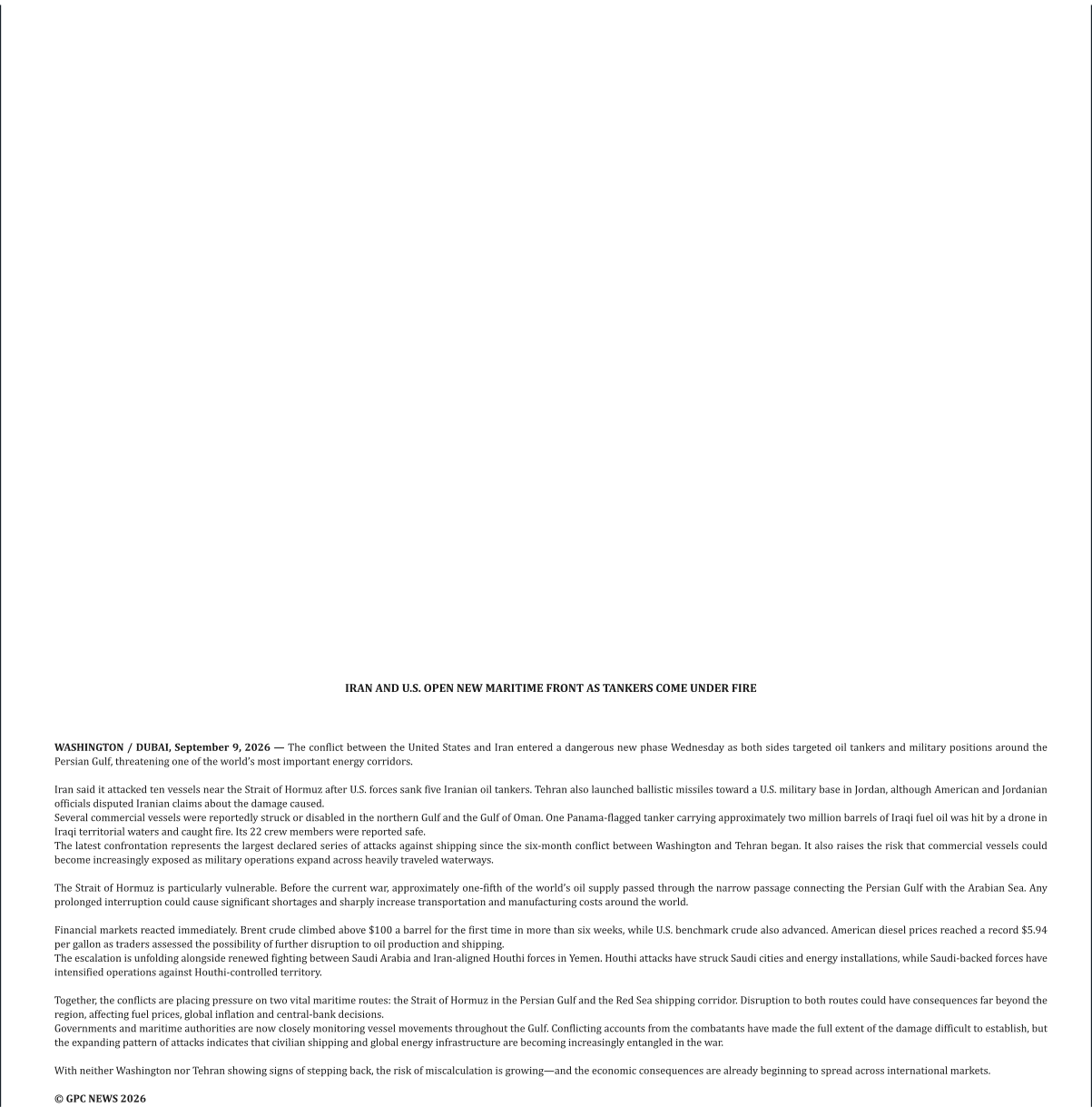
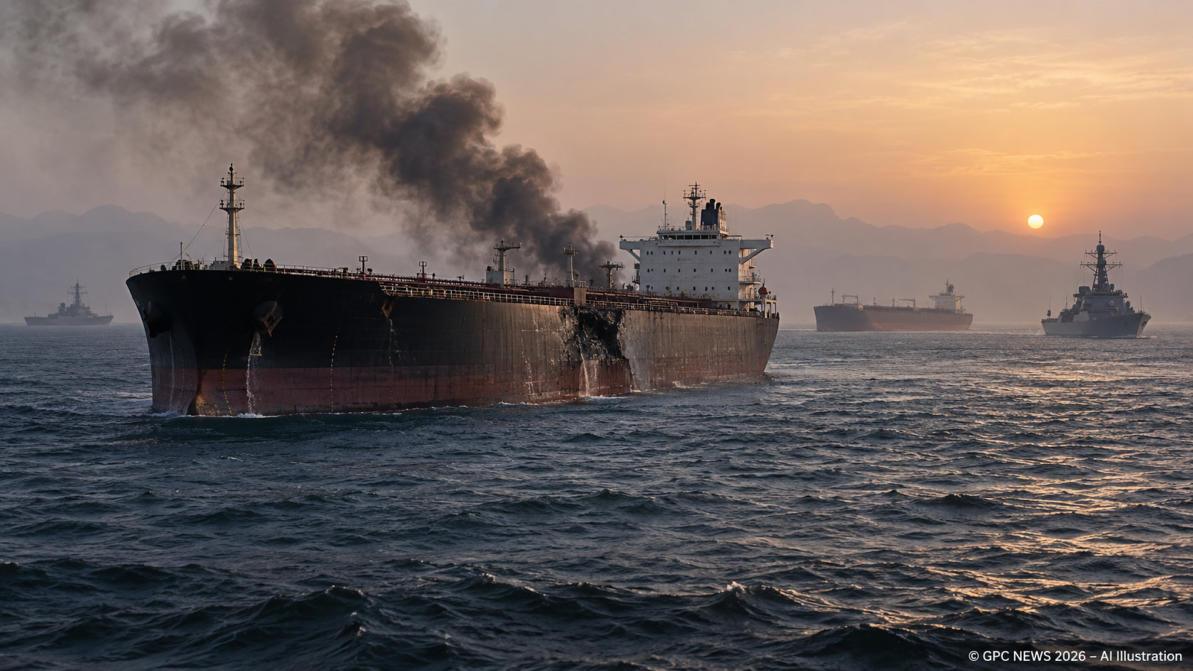
Global Press Connect provides independent news and analysis on international  politics, the economy, and humanitarian developments. © 2026 GlobalPressConnect | GPC.NEWS Founded and operated by Simone Mayer & Helping Hands for Children Foundation Inc. | Los Angeles, California, USA GlobalPressConnect (GPC.NEWS) is an independent international news organization dedicated to delivering accurate, impartial, and timely journalism. Our mission is to provide verified reporting, editorial integrity, and in-depth coverage of global affairs, politics, business, financial markets, technology & AI, entertainment, humanitarian issues, weather, and breaking news. All Rights Reserved. IRAN AND U.S. OPEN NEW MARITIME FRONT AS TANKERS COME UNDER FIRE    WASHINGTON / DUBAI, September 9, 2026 — The conflict between the United States and Iran entered a dangerous new phase Wednesday as both sides targeted oil tankers and military positions around the Persian Gulf, threatening one of the world’s most important energy corridors.  Iran said it attacked ten vessels near the Strait of Hormuz after U.S. forces sank five Iranian oil tankers. Tehran also launched ballistic missiles toward a U.S. military base in Jordan, although American and Jordanian officials disputed Iranian claims about the damage caused. Several commercial vessels were reportedly struck or disabled in the northern Gulf and the Gulf of Oman. One Panama-flagged tanker carrying approximately two million barrels of Iraqi fuel oil was hit by a drone in Iraqi territorial waters and caught fire. Its 22 crew members were reported safe. The latest confrontation represents the largest declared series of attacks against shipping since the six-month conflict between Washington and Tehran began. It also raises the risk that commercial vessels could become increasingly exposed as military operations expand across heavily traveled waterways.  The Strait of Hormuz is particularly vulnerable. Before the current war, approximately one-fifth of the world’s oil supply passed through the narrow passage connecting the Persian Gulf with the Arabian Sea. Any prolonged interruption could cause significant shortages and sharply increase transportation and manufacturing costs around the world.  Financial markets reacted immediately. Brent crude climbed above $100 a barrel for the first time in more than six weeks, while U.S. benchmark crude also advanced. American diesel prices reached a record $5.94 per gallon as traders assessed the possibility of further disruption to oil production and shipping. The escalation is unfolding alongside renewed fighting between Saudi Arabia and Iran-aligned Houthi forces in Yemen. Houthi attacks have struck Saudi cities and energy installations, while Saudi-backed forces have intensified operations against Houthi-controlled territory.  Together, the conflicts are placing pressure on two vital maritime routes: the Strait of Hormuz in the Persian Gulf and the Red Sea shipping corridor. Disruption to both routes could have consequences far beyond the region, affecting fuel prices, global inflation and central-bank decisions. Governments and maritime authorities are now closely monitoring vessel movements throughout the Gulf. Conflicting accounts from the combatants have made the full extent of the damage difficult to establish, but the expanding pattern of attacks indicates that civilian shipping and global energy infrastructure are becoming increasingly entangled in the war.  With neither Washington nor Tehran showing signs of stepping back, the risk of miscalculation is growing—and the economic consequences are already beginning to spread across international markets.  © GPC NEWS 2026